
Craft beer has come a long way. For much of the industry’s first four decades, strong growth covered up a fair amount of operational inefficiency.
Demand often outpaced supply, distribution networks kept expanding, and breweries could rely on spreadsheets and manual processes because there was always another account to win.
The craft brewery industry looks very different today. The beer industry trends for 2027 will reflect an industry facing tighter margins, changing consumer preferences, rising ingredient costs, and greater operational complexity.
The biggest developments may have less to do with flashy new beer styles and more to do with how breweries run their businesses. Read on as The Beer Post breaks down five trends to define the sector in 2027.
Beer Industry Trends 2027: How Craft Brewing Has Changed

The UK is a prime example of how modern craft beer evolved. The sector grew out of a wave of small, passion-led breweries that prioritised recipe quality, experimentation, and independence.
It expanded rapidly, rising from around 400 independent brewers in 2002 to more than 1,800 active ones at its peak. The Society of Independent Brewers and Associates (SIBA) Brewery Tracker recorded 1,828 UK breweries in January 2023, making Britain one of the world’s most brewery-dense markets relative to its population.
Its growth also gave independent breweries genuine cultural credibility, but the commercial environment has become far tougher. At the start of 2026, SIBA has recorded 1,578 breweries down from 1,715 a year earlier. Factors such as rising costs, tight margins, market access problems and wider pressures on pubs weigh on smaller producers.
Operational excellence is now the primary growth engine, putting business maturity at the centre of beer industry trends in 2027.
5 Trends Shaping the Future of Craft Beer Industry in 2027
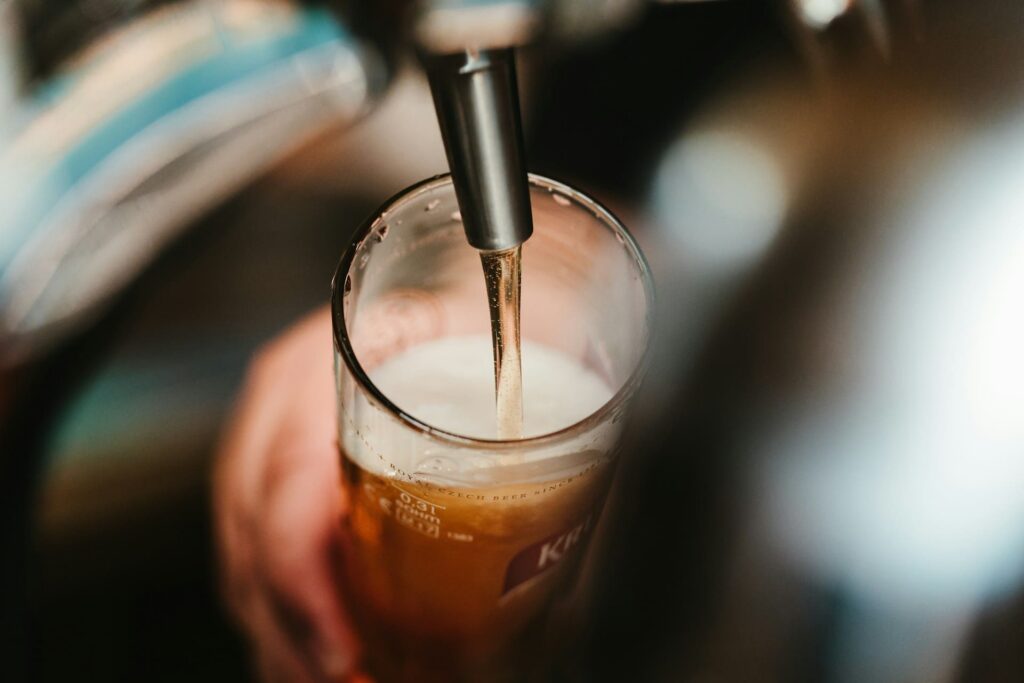
The craft beer trends in 2027 are not only about what consumers want to drink, but also reveal how breweries need to operate, sell and compete in a more demanding market.
1. Brewery ERP Software Becomes the Norm
For much of craft beer’s first 40 years, spreadsheets and disconnected software could get the job done.
Demand often outpaced supply, new accounts kept appearing, and breweries had plenty of reasons to focus on brewing and administration last. That model has become harder to sustain.
At present, tighter margins and more complex operations make connected technology an advantage rather than a nice-to-have. Brewery ERP software brings production, inventory, purchasing, sales and financial information into one connected environment.
Platforms such as Ekos can link processes across the brewery. Moreover, teams are able to track everything from grain purchasing through production and finished sales.
Instead of chasing information across Excel and separate systems, brewery teams gain a clearer view of costs, stock levels and performance. As operational discipline becomes increasingly important, ERP adoption is likely to become a defining feature of the modern brewery.
2. Automated Payments and Ordering Go Mainstream
The next stage of brewery technology focuses on what happens after an order leaves the sales team. Beverage businesses are now moving towards embedded payments that connect ordering, invoicing, payment collection and reconciliation inside the same workflow.
PaySmart is one example reflecting this direction. This platform allows breweries to move from order creation towards invoice settlement without repeatedly moving information between disconnected systems or relying on manual exports.
Electronic payment processing can also reduce administrative work, improve visibility over outstanding invoices and give teams more time to focus on customers and sales.
These developments point to a broader brewery technology trends story. Automation is moving deeper into everyday commercial processes. Payment infrastructure is becoming a natural part of brewery management software.
3. No- and Low-Alcohol Beer Trends Continue Their Rapid Growth
No- and low-alcohol beer has moved well beyond its old reputation as a compromise for people who simply wanted something that looked like beer. More and more consumers want the social experience of drinking beer while reducing their alcohol intake, and breweries are responding with more ambitious products.
Statista reports that non-alcoholic beer has become one of the stronger areas of the global beer market. The segment has recorded annual growth of between 6% and 17% over the past five years, while global sales are forecast to reach $49 billion by 2030.
It gives breweries a compelling reason to treat alcohol-free and low-ABV products as part of their core portfolio instead of occasional additions. Younger consumers, in particular, can enjoy brewery and taproom culture while moderating how much alcohol they consume.
The opportunity extends across pubs, retailers and hospitality venues, making this category one to watch closely in 2027.
4. Craft and Light Beer Show Real Resilience
Craft beer may no longer enjoy the rapid growth that characterised its earlier years, but consumer enthusiasm has not disappeared. Drinkers still seek out breweries they trust, return to familiar favourites and remain willing to pay for beers that offer quality and character.
At the same time, lighter and more sessionable styles are attracting renewed attention after years of IPA dominance. Drinkers can enjoy these beers more frequently without the intensity, bitterness or higher ABV associated with some hop-forward styles.
This combination makes resilience a useful theme in the beer industry trends of 2027. Craft beer does not need another explosive boom to remain relevant.
Breweries that understand changing occasions, offer accessible styles and maintain a strong connection with their customers can continue building sustainable demand.
5. Complex, Experimental Flavour Profiles Keep Pushing Boundaries
The growing appeal of lighter and lower-alcohol beers does not mean experimentation is disappearing. It is actually quite the opposite. Breweries continue searching for distinctive flavours that give drinkers something they cannot easily find elsewhere.
Hyper-local and farm-to-glass brewing can support that ambition. Brewers can incorporate regional fruit, herbs, grains, botanicals and other unusual ingredients to create beers that reflect a particular place.
These products can turn local sourcing into a genuine point of difference, especially for independent breweries competing against brands that operate at enormous scale.
The tension between accessibility and experimentation could define beer industry trends in 2027. Consumers can enjoy an easy-drinking lager one day and seek out an unusual, boundary-pushing release the next.
For independent breweries, freedom remains one of craft beer’s greatest strengths. The challenge is turning creativity into commercially sustainable products that customers remember, seek out and buy again.
Real Cost of Ignoring Craft Beer Trends in 2027
The cost of standing still can be difficult to see on a balance sheet at first. Yet small inefficiencies, missed sales opportunities, and rising administrative demands can quickly add up when a brewery operates in a tougher market.
Falling Behind on Operational Efficiency
Breweries that still depend on manual processes face a structural disadvantage. Tighter margins and higher operating costs leave less room for duplicated work, outdated information and avoidable mistakes.
Competitors using connected ERP systems can automate routine tasks and gain clearer insight into production, inventory and costs.
Losing Ground on Cash Flow and Administrative Overhead
Manual invoicing and payment reconciliation can consume valuable staff time while creating errors and delaying cash collection. Those costs accumulate over time, putting additional pressure on already-tight margins.
The Beer Post’s coverage of cost-saving strategies highlights how smarter processes can help breweries control unnecessary overhead and protect profitability.
Missing an Entire, Growing Consumer Segment
A brewery without a no- or low-alcohol option risks missing consumers who want to participate in beer culture while drinking less. That leaves a growing purchase occasion open to competitors and specialist alcohol-free brands.
Becoming Commercially Invisible in a Crowded Market
Generic products make it harder for independent breweries to command attention. A distinctive flavour profile, local ingredient or compelling brewing concept gives customers a reason to choose one brewery over another. Without that difference, price becomes the main competitive tool.
The beer industry trends in 2027 do not require breweries to abandon their identity. They call for advanced, more resilient operations around the beer that already makes a brewery worth visiting.
Beer Trends in 2027: Breweries Should Evolve Their Operations, Not Just Their Recipes
The breweries thriving in 2027 won’t necessarily be the ones brewing the single best IPA or winning the most medals. They’ll be the ones building strategic, more connected, more efficient businesses around consistently good beer.
Great recipes still matter, but they no longer carry a brewery on their own in a market this competitive. Operations, technology, and financial discipline now decide who grows and who stalls.
The Beer Post keeps breweries, pubs, and supply chain companies informed on the trends, technology, and opportunities influencing the industry’s next chapter.
Get in touch to stay current on what’s latest across the global sector!