
Disclaimer: This guide is for informational purposes only and does not constitute legal or professional advice. The content is based on publicly available research and official regulatory sources at the time of writing. Regulations change frequently, and The Beer Post accepts no responsibility for any inaccuracies or omissions. Always consult a qualified professional or the relevant regulatory authority before making compliance decisions.
Launching a brewery in the United Kingdom involves far more than perfecting recipes and investing in fermentation tanks. Most operators are surprised by the breadth of the commercial brewing regulations in the UK that breweries must meet before a single pint can be sold.
Tax registrations, Alcohol Duty obligations, food business registration, licensing requirements, product labelling rules, and premises compliance all form part of the regulatory framework governing commercial brewing.
This guide is based on the official GOV.UK guidance published in March 2025. It brings together the rules and regulations affecting breweries across England, Scotland, and Wales.
It is important to note that this applies to England, Scotland, and Wales only. Breweries operating in Northern Ireland should instead follow the separate guidance available through nibusinessinfo.co.uk.
In this article, we’ll break down the practical compliance steps, regulatory requirements, licences, tax responsibilities, food safety standards, and labelling obligations for breweries.
Commercial Brewing Regulations in the UK: Quick Start Checklist
Several legal requirements carry mandatory lead times, making early preparation essential:
Apply for Alcoholic Products Producer Approval (APPA)
Every commercial brewer must obtain an Alcoholic Products Producer Approval (APPA) from HMRC before brewing begins. This approval functions as the primary brewery licence in the UK production and allows the business to manufacture alcoholic products legally.
The application must be submitted at least 45 working days before the first commercial brew. That translates to roughly nine calendar weeks, making it one of the earliest tasks in the startup process.
HMRC uses this period to assess the application and review the brewery’s proposed operations. Contract brewing is the main exception. In that arrangement, the brewery producing the beer holds the approval and remains responsible for paying Alcohol Duty.
Register as a Food Business
Every brewery must also register as a food business before trading. This requirement sits separately from HMRC approval and applies regardless of production volume.
Registration must be completed at least 28 days before operations begin. Breweries in England and Wales register through their local council, while Scottish businesses register through Food Standards Scotland.
The process is free, and authorities cannot refuse a valid registration. Failing to register, however, is a criminal offence and can create problems during inspections.
Commercial Brewing Regulations in the UK: Other Considerations
Several additional requirements may apply before opening day.
- Planning permission may be necessary if the premises were not previously used as a brewery.
- Business rates registration typically needs to be completed through the local authority.
- Commercial brewing also consumes substantial amounts of water, making suitable water and sewerage connections an important consideration.
- Breweries that discharge liquid waste into the public sewer may also require a trade effluent permit from the relevant water company.
A brewery that leaves paperwork until the final stages of its launch can easily delay its first commercial batch by several weeks, even when the brewing equipment is ready to go.
Commercial Brewing Regulations in the UK: Alcohol Duty And VAT

Many brewery owners focus heavily on equipment, ingredients, and sales channels, only to discover that tax obligations create some of the biggest administrative responsibilities.
Comprehensive integration with these commercial brewing regulations in the UK is essential for accurate pricing, rigorous cash-flow planning, and sustained long-term profitability.
Alcohol Duty Rules For Commercial Breweries
Every commercial brewery must pay UK alcohol duty on beer produced for sale. HMRC calculates the duty based on the alcoholic strength of the finished product, which means the beer’s ABV must be measured accurately before the correct duty amount can be determined.
Alcohol Duty does not become payable when the beer is brewed. Instead, it is generally triggered when the product leaves the brewery and enters non-approved premises such as a pub, retailer, wholesaler, or other part of the commercial supply chain.
Brewery owners should maintain accurate production and stock records, as HMRC expects businesses to demonstrate how duty calculations have been reached.
Small Producer Relief
Smaller breweries may qualify for Small Producer Relief, which reduces the amount of alcohol duty payable. This relief can provide a valuable financial advantage during the early stages of growth.
Eligibility depends on annual production volumes and other criteria set by HMRC. Rates and thresholds can change over time. Owners should check the latest guidance directly through HMRC before making financial projections.
The GOV.UK alcohol duty collections page remains the most reliable source for current information.
Moving Beer Between Premises Without Paying Duty
Not every movement of beer triggers a duty payment. HMRC allows beer to move between approved premises without duty becoming payable at that stage.
Common examples include:
- Transferring beer to a contract canning facility
- Sending stock to an excise warehouse for storage
- Moving products between approved production sites
Duty generally becomes due only when the beer enters the non-approved supply chain. Familiarity with this distinction helps breweries avoid paying duty earlier than necessary and supports better cash-flow management.
VAT Rules For UK Commercial Breweries
VAT operates separately from alcohol duty and applies to the sale of beer rather than its production. Breweries that are VAT-registered must charge VAT on eligible sales and account for it through their VAT returns.
Registration becomes mandatory once a business exceeds the current VAT turnover threshold, although voluntary registration remains an option below that level. Brewery owners approaching the threshold should seek professional accounting advice early.
Commercial Brewing Regulations in the UK: Moving Beer to and from Northern Ireland
Additional requirements apply when beer moves between Great Britain and Northern Ireland. Breweries involved in these transactions must register for the NI Retail Movement Scheme and obtain a General Certificate for each consignment.
Documentation requirements can vary depending on the nature of the shipment and its destination. The Trader Support Service provides practical assistance and guidance for businesses going through these movements.
Alcohol duty and VAT can quickly become complex as production volumes increase. A specialist drinks industry accountant can help breweries establish compliant systems, manage reporting obligations, and identify available reliefs.
Commercial Brewing Regulations in the UK: Licensing Rules And Distribution
Anyone researching how to start a commercial brewery in the UK should understand that different licences apply depending on who buys the beer and where sales take place.
Selling to Other Businesses (Wholesale)
A brewery that sells alcohol to another business must register under the Alcohol Wholesaler Registration Scheme (AWRS). This applies when supplying to:
- Pubs
- Restaurants
- Bars
- Bottle shops
- Supermarkets
- Wholesalers
- Other trade customers
AWRS registration in UK brewery operations is mandatory from the first wholesale transaction. HMRC uses the scheme to prevent alcohol fraud and improve supply-chain transparency. Registration is not something a brewery can postpone until sales increase.
Operating as an alcohol wholesaler without AWRS approval is a criminal offence and can result in penalties. Brewery owners should therefore complete the registration process before approaching trade customers or signing supply agreements.
Direct-To-Consumer Licensing For UK Breweries
Different rules apply when a brewery sells alcohol directly to consumers. Common examples include:
- Taprooms
- Brewery shops
- Online sales
- Takeaway beer collections
A brewery must hold the appropriate premises licence or personal licence issued by the local licensing authority. England and Wales operate under the Licensing Act 2003, while Scotland follows the Licensing (Scotland) Act 2005.
Local councils administer applications and often consult relevant authorities before approving. Processing times vary, but several weeks are common.
Selling at Events
Beer festivals, markets, community celebrations, and trade shows can create valuable sales opportunities. Special permissions may still be required when an event takes place at an unlicensed venue.
England and Wales generally require a Temporary Event Notice (TEN), while Scotland uses an occasional licence system. Authorities place limits on the number of temporary permissions available for individual premises each year.
Breweries planning multiple events should review those limits early and schedule applications well in advance.
Advertising and Marketing
Alcohol marketing carries legal responsibilities alongside commercial opportunities. All advertising must comply with UK advertising rules and guidance issued by the Advertising Standards Authority.
Health-related claims, messages that encourage excessive drinking, and content that appeals to under-18s receive particular scrutiny.
Commercial Brewing Regulations in the UK: Food Safety
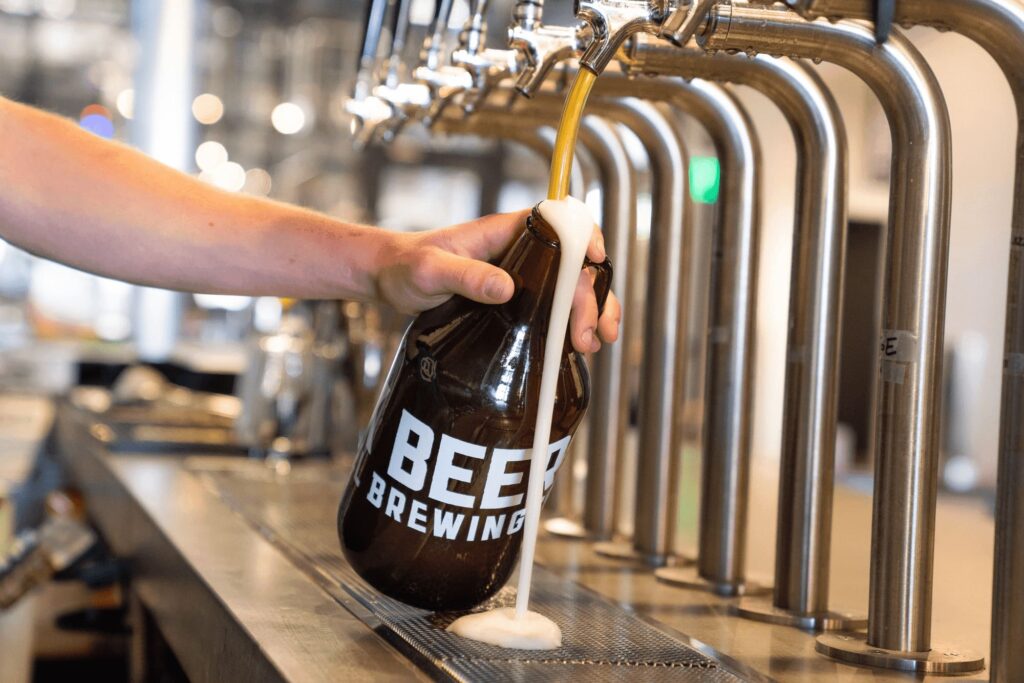
Breweries produce food products, which means food law applies alongside alcohol regulations. Knowledge of food safety regulations in brewery operations is essential for protecting product quality, maintaining legal compliance, and building trust.
HACCP Requirements For Commercial Breweries
Every commercial brewery must operate a food safety management system based on Hazard Analysis and Critical Control Point (HACCP) principles. This requirement sits at the heart of commercial brewing regulations in the UK and is a legal obligation rather than a recommended practice.
A HACCP plan involves the following:
- Identifying potential hazards
- Assessing risks
- Establishing controls throughout the brewing process
Local authorities enforce food safety and hygiene laws and may inspect brewery premises at any stage of production, storage, or distribution. More so, Inspections can take place without advance notice, making accurate records and documented procedures essential.
Food Hygiene Ratings
Food hygiene ratings provide a public measure of a brewery’s compliance with food safety standards. Breweries in England that sell directly to consumers, along with all breweries in Wales that supply either consumers or businesses, receive a rating following inspection by the local council.
Scotland operates the Food Hygiene Information Scheme instead. Ratings and inspection outcomes are publicly accessible, making them an important factor in consumer perception and trade relationships.
Allergen Handling and Traceability
Breweries must store and handle ingredients carefully to prevent cross-contamination. Staff should receive appropriate allergen awareness training and understand how allergens may enter the production process.
Traceability records are equally important. Breweries must maintain details of suppliers and customers, including names, addresses, product quantities, transaction dates, and delivery information. Inspectors can request these records at any time.
Additives, Enzymes, and Organic Ingredients
Certain additives, flavourings, preservatives, and enzymes require authorisation before use in beer. Organic ingredients must come from suppliers certified through an approved organic control body.
Products containing genetically modified organisms or GMO-derived ingredients must disclose that information on the label where required by law.
Commercial Brewing Regulations in the UK: Labelling
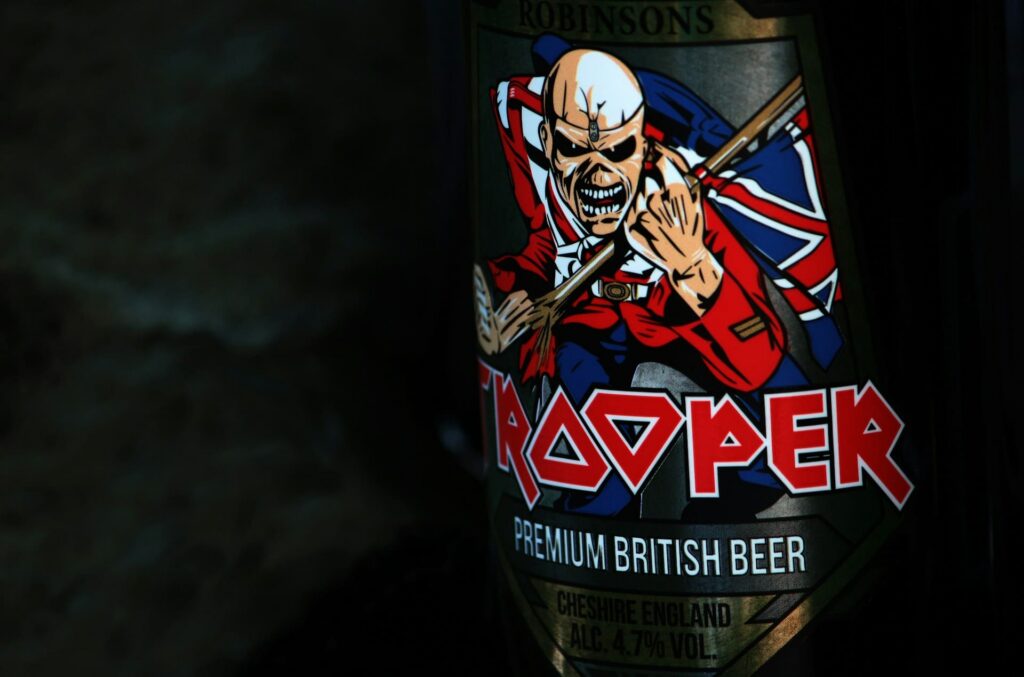
While a beer label showcases branding and artwork, it also serves as a legal document that provides consumers, retailers, and regulators with important product information.
Incorrect or incomplete labels can lead to compliance issues, product recalls, and reputational damage.
Commercial Brewing Regulations in the UK: Weights and Measures Compliance
Bottles, cans, and kegs must comply with UK weights and measures regulations. The volume stated on the packaging must accurately reflect the amount of beer inside the container.
Breweries should regularly check filling equipment and maintain records that demonstrate consistent accuracy. Underfilled products can create regulatory problems and may also breach consumer protection laws.
Accurate filling is therefore both a compliance requirement and a quality control responsibility.
Commercial Brewing Regulations in the UK: Mandatory Label Information
Pre-packed beer sold in England and Wales must meet food and drink labelling requirements, including:
- Product name
- Alcohol by volume (ABV)
- Ingredient information
- Declared allergens
- Net quantity
- Name and address (producer or responsible business)
Scotland follows food labelling requirements administered through Food Standards Scotland.
ABV and Low-Alcohol Descriptors
The alcoholic strength of the beer must appear on the label or directly on the container. Accurate ABV declarations are important because consumers and regulators rely on this information.
Low-strength products must also use the correct terminology. Terms such as “low alcohol,” “de-alcoholised,” and “alcohol-free” each have specific legal definitions linked to ABV thresholds.
A brewery cannot use these descriptions unless the product meets the relevant criteria.
Safe Drinking Guidelines and GMO Disclosure
Labels should communicate the UK Chief Medical Officers’ low-risk drinking guidelines to promote responsible consumption.
Additional disclosures may apply depending on the ingredients used. Beer containing genetically modified organisms or GMO-derived ingredients must state this clearly on the label.
Organic products must also follow UK organic food labelling rules before carrying organic claims or certification marks.
Commercial Brewing Regulations in the UK: Premises, Equipment And Compliance
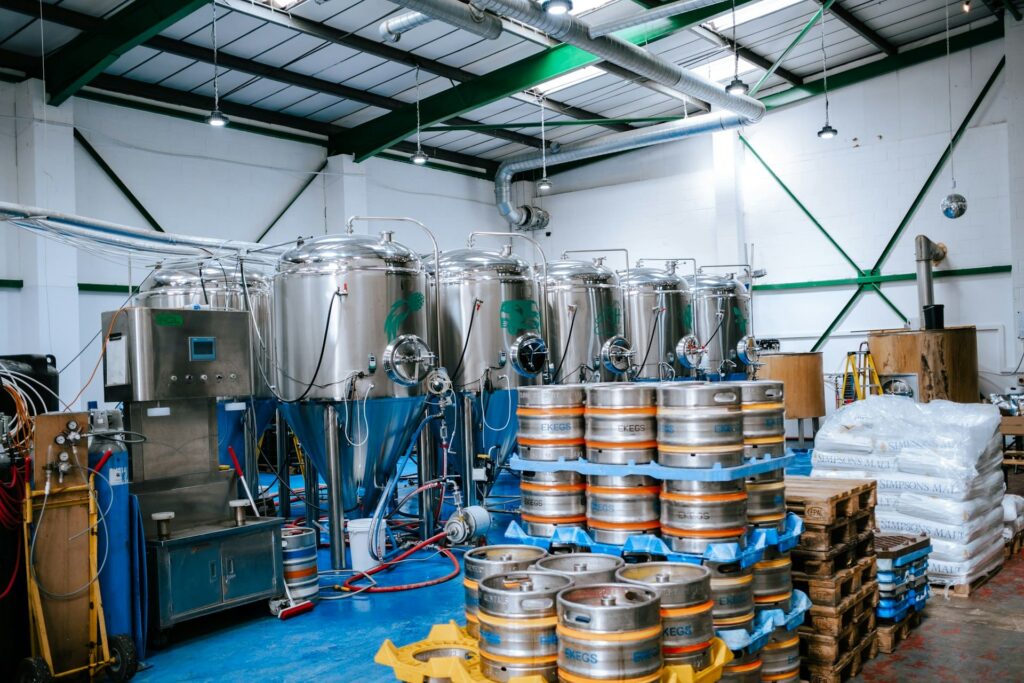
Buildings, equipment, utilities, and workplace procedures all fall under regulatory scrutiny. Obtaining a brewery licence in the UK is only one part of the process.
The premises must also meet several operational and safety requirements before production can run smoothly.
Health and Safety at Work
Every brewery must comply with health and safety legislation enforced by the Health and Safety Executive (HSE). Brewing environments contain numerous workplace hazards, such as heavy lifting, pressurised equipment, cleaning chemicals, hot liquids, and slippery surfaces.
Operators must:
- Assess risks
- Provide appropriate staff training
- Maintain equipment correctly
- Implement safe working procedures
Chemical storage, manual handling practices, and employee welfare facilities all form part of routine compliance obligations.
Fire Safety
Fire safety law applies to all commercial brewery premises. A fire risk assessment is a legal requirement and should identify potential hazards, vulnerable areas, and suitable control measures.
Businesses must:
- Document fire safety procedures
- Maintain emergency equipment
- Establish clear evacuation plans
England and Wales operate under the Regulatory Reform (Fire Safety) Order 2005, while Scotland follows separate fire safety legislation.
Planning Permission For Brewery Premises
Planning considerations often arise before brewing even begins. A property that has not previously operated as a brewery will typically require planning permission and a change of use application.
Local authority approval can take several months, particularly if additional environmental or traffic assessments are required. Brewery owners should begin discussions with planning officers as early as possible to avoid delays to opening schedules.
Water, Drainage, and Waste
Commercial brewing consumes significant quantities of water, and all usage is charged at business rates. Trade effluent discharged into the sewer system requires a permit from the relevant water authority.
Breweries that take water directly from a natural source need a separate abstraction licence. Spent grain and other by-products intended for animal feed must remain separate from waste materials and comply with feed hygiene requirements throughout storage and handling.
Commercial Brewing Regulations in the UK: Tips
Success under commercial brewing regulations in the UK starts with good habits.
- Start the paperwork earlier than expected. The 45-working-day APPA application period and the 28-day food business registration requirement create fixed deadlines. Missing either one can push back a brewery launch by several weeks.
- Do not assume contract brewing removes every responsibility. Contract brewers may not pay alcohol duty directly, but they still need food business registration and any licences required for sales, storage, or distribution activities.
- Get specialist accounting advice before the first sale. Alcohol duty, VAT, and Small Producer Relief create tax obligations that many general accountants rarely encounter. Industry-specific expertise can prevent costly mistakes and improve financial planning.
- Keep traceability records from day one. Food Standards Agency inspectors can request supplier and customer information at any stage. A clear record-keeping system makes inspections far easier and reduces compliance risks.
- Read the GOV.UK guidance directly. Official guidance remains free, regularly updated, and authoritative. Brewery owners should consult it first whenever questions arise about legal requirements or regulatory changes.
- Plan labelling before production begins. Incorrect labels can create expensive problems once packaging has been printed or products have entered the market. A compliance review during the design stage costs far less than a product recall or enforcement action.
Commercial Brewing Regulations in the UK: Why They Matter
The commercial brewing regulations in the UK exist for good reason. They protect consumers, maintain product quality, support fair competition, and help create confidence across the brewing industry.
Every requirement discussed in this guide is crucial in keeping beer production safe, transparent, and accountable.
A brewery that treats compliance as a priority from the beginning places itself in a stronger position for long-term success. Early preparation helps avoid costly fines, operational delays, rejected applications, product recalls, and reputational damage that can affect growth.
Regulatory readiness ultimately supports commercial readiness. A brewery that has its compliance in order can focus its energy on what it set out to do:
- Brew excellent beer
- Win customers
- Build a sustainable business
Want to stay ahead of industry changes? Subscribe to The Beer Post for daily news, regulatory updates, trade opportunities, and practical insights for breweries and drinks businesses.