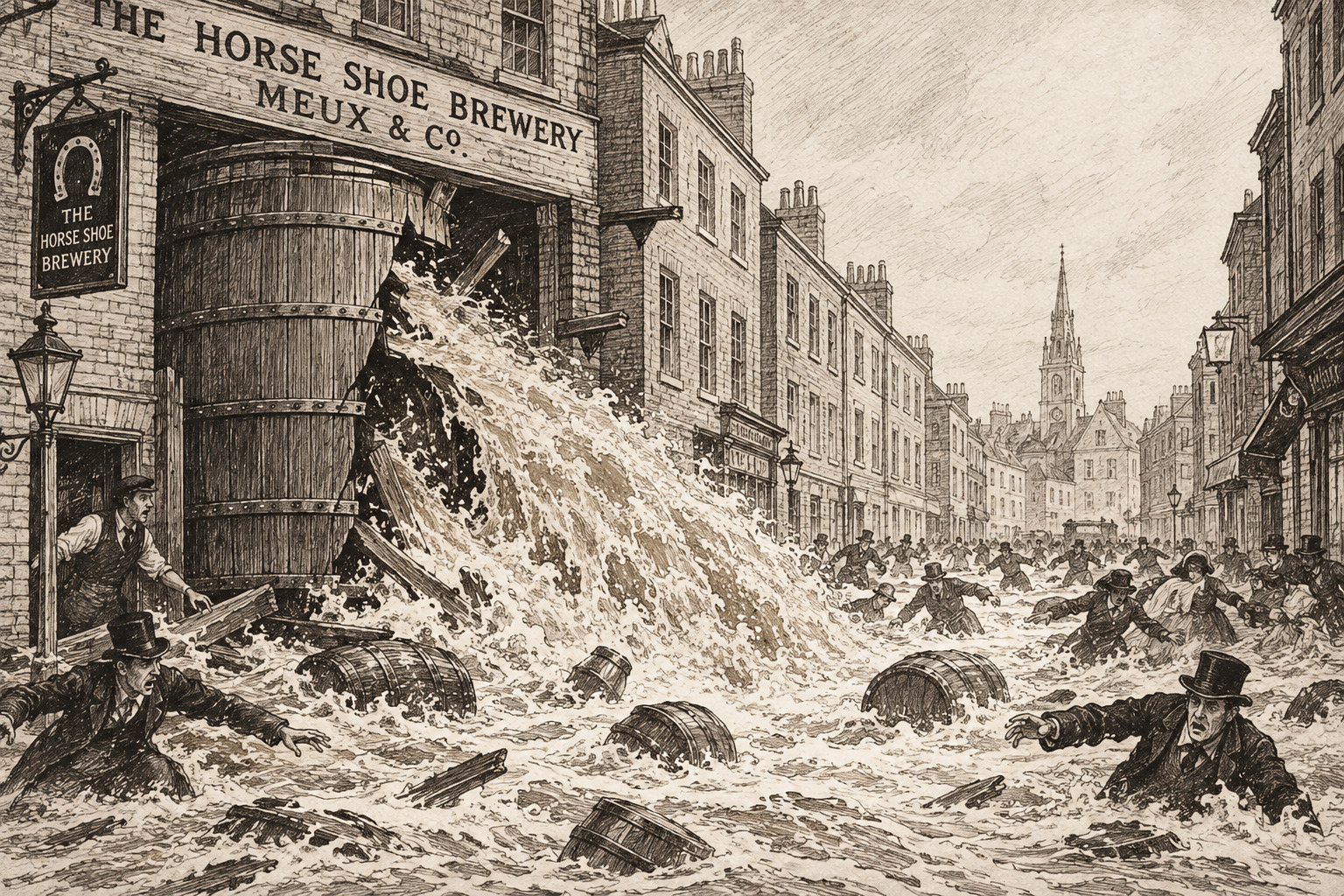
On 17 October 1814, a 22-foot wooden fermentation vat at the Horse Shoe Brewery in St Giles, London, ruptured, releasing more than 320,000 gallons of beer onto the streets in a wave reported to have reached around 15 feet high.

On 17 October 1814, a 22-foot wooden fermentation vat at the Horse Shoe Brewery in St Giles, London, ruptured, releasing more than 320,000 gallons of beer onto the streets in a wave reported to have reached around 15 feet high.
Empty Chairs is a community-led campaign that invites people to book a small table in a pub or café, leave a few chairs empty, and make it easy for anyone who wants company to sit down.
The UK on-trade craft beer market accounted for 6.8% of total beer volume in the 12 months to March 2026, down 4.9% year on year and 10% over two years, according to The Morning Advertiser’s Beer Report 2026.
Guinness 0.0 has made its Southeast Asian debut in Singapore, while New Zealand’s DB Breweries has completed a trial of zero-alcohol beer on draught and is now rolling the format out to 300 venues.
On September 18, 2026, New Zealand Minister Cameron Brewer officially opened DB Breweries’ upgraded Waitematā facilities. The $30 million project expanded and modernised both brewing and packaging operations.
Victoria’s state government has promised $3 million for brewery taproom and tourism upgrades. Announced by Premier Ben Carroll, the pledge depends on Labor winning re-election on November 28, 2026.
Camel Beer has broken ground on a roughly $107 million beer and beverage plant in Cần Thơ, while South Korea’s HiteJinro is preparing to brew Kirin Ichiban locally for the first time. Both moves point to the same regional pattern: brewers are investing in production closer to fast-growing Asian demand.
Beer and pub trade bodies are stepping up calls for changes to UK beer duty ahead of the October 28, 2026 Budget. The British Beer and Pub Association (BBPA) is calling for a beer duty freeze and stronger draught-duty support. Meanwhile, the Society of Independent Brewers and Associates (SIBA) is running its “Drop the Tap Tax” campaign, focused specifically on expanding Draught Relief for beer sold through pubs.

The official German hop harvest 2026 estimate points to a yield roughly 22% below normal, following one of the hottest, driest summers on record. Extreme heat and prolonged drought have reduced crop potential across growing regions, putting pressure on this year’s supply.