
Records show that China has one of the world’s oldest brewing traditions. Archaeological evidence published in the Proceedings of the National Academy of Sciences (PNAS) proves that Chinese villagers were brewing beer-like alcoholic drinks as far back as 5000 BC.
That said, the craft beer industry in China is still remarkably young. After emerging only about two decades ago, it has grown into one of the most closely watched beer markets in the world.
The sector has been attracting attention from breweries, suppliers, and investors alike, making the country unlike any other brewing destination. A civilisation with thousands of years of brewing heritage now stands at the centre of one of the industry’s newest and most dynamic chapters.
As the market continues to flourish, knowing where it came from and where it is headed has become increasingly important for businesses looking beyond the traditional beer trade.
Read on to discover the story behind China’s modern craft beer sector, its current market position, and what the future holds for companies hoping to be part of its succeeding stages.
Where Did Chinese Craft Beer Come From?

The country’s craft beer market growth spurt draws inspiration from a brewing tradition that stretches back 5,000 years. China’s earliest beer-like drink was “li,” a lightly fermented beverage made from sprouted grains and wild yeast. Over time, it gave way to “huangjiu,” which dominated Chinese drinking culture for centuries.
Western Influence on Microbrewery in China
European-style beer arrived in the early 1900s when breweries opened in Harbin and Qingdao, but lager remained a niche product for decades. Economic reforms eventually turned China into the world’s largest beer producer, although the market became dominated by light, mass-produced lagers.
Demand for more distinctive flavours emerged later as imported speciality beers introduced drinkers to new styles and inspired the country’s first craft breweries.
Expat-Led First Wave (2006-2013)
China’s modern craft beer gained traction in the mid-2000s through passionate expatriate brewers. Although many associate its beginnings with Shanghai or Beijing, the country’s first modern craft brewery opened in Nanjing.
Known as Master Gao, the pioneering brewer launched the brewery of the same name in 2008, helping introduce independent brewing to the local market.
Around the same time, Gary Heyne helped establish Shanghai’s early craft beer scene, while Beijing’s Great Leap Brewing became a catalyst for the capital’s growing community of independent brewers.
Limited access to quality hops, yeast, and brewing ingredients made those early years challenging. However, dedication and experimentation laid the foundation for craft beer in China’s expansion and future proliferation.
Handover to Local Brewers
The craft beer scene has gradually veered into local hands. Chinese-owned breweries, homebrewing communities, and regional taprooms now steer the industry’s direction as domestic consumers become the primary audience.
This transition has transformed craft beer from an expatriate curiosity into a fast-growing market built around local tastes, regional creativity, and long-term industry development.
How Big Is the Craft Beer Industry in China Right Now?
China’s beer market continues to expand despite changing consumer preferences. Grand View Research revealed that the market is projected to reach $155.6 billion by 2030, with 6.4% CAGR between 2025 and 2030. China will also remain the largest beer market in the Asia-Pacific region by revenue through 2030. Against that backdrop, the craft segment continues to gain momentum.
Post-COVID Reset
China’s beer industry emerged from the pandemic looking very different. Traditional alcoholic drinks have struggled to regain their previous demand, with baijiu sales falling by an estimated 15% in 2025 and production declining by roughly 12% year on year. Imported wine also recorded a sharp drop of around 26% during the same period.
Craft beer, however, has moved in the opposite direction. Industry estimates valued the segment at RMB 35–45 billion in 2023, compared with around RMB 30 billion before the pandemic, highlighting its continued resilience.
Domestic vs. International Players
China’s craft beer market has evolved far beyond its expatriate roots. Global companies have recognised its potential, illustrated by AB InBev’s acquisition of Shanghai’s Boxing Cat Brewery in 2017. Large domestic brewers, including Snow (CR Beer), Tsingtao, and Yanjing, still account for more than 65% of the overall beer market.
Craft beer remains the industry’s most dynamic and competitive category. Thus, independent breweries continue to challenge established brands through innovation and regional identity.
Government Support as a Structural Tailwind
Government policy has also strengthened confidence in the sector. In February 2026, China’s Ministry of Industry and Information Technology introduced the Guidelines for the Quality Improvement of the Alcoholic Beverage Industry (2026–2030), promoting higher production standards and technical innovation. That national commitment signals long-term opportunities for breweries, suppliers, and international partners.
Although the craft beer industry in China still represents only a small share of total beer sales, 5% of a $156 billion market is an enormous commercial opportunity, and it continues to grow.
What Sets China’s Craft Beer Market Apart From Every Other Sector
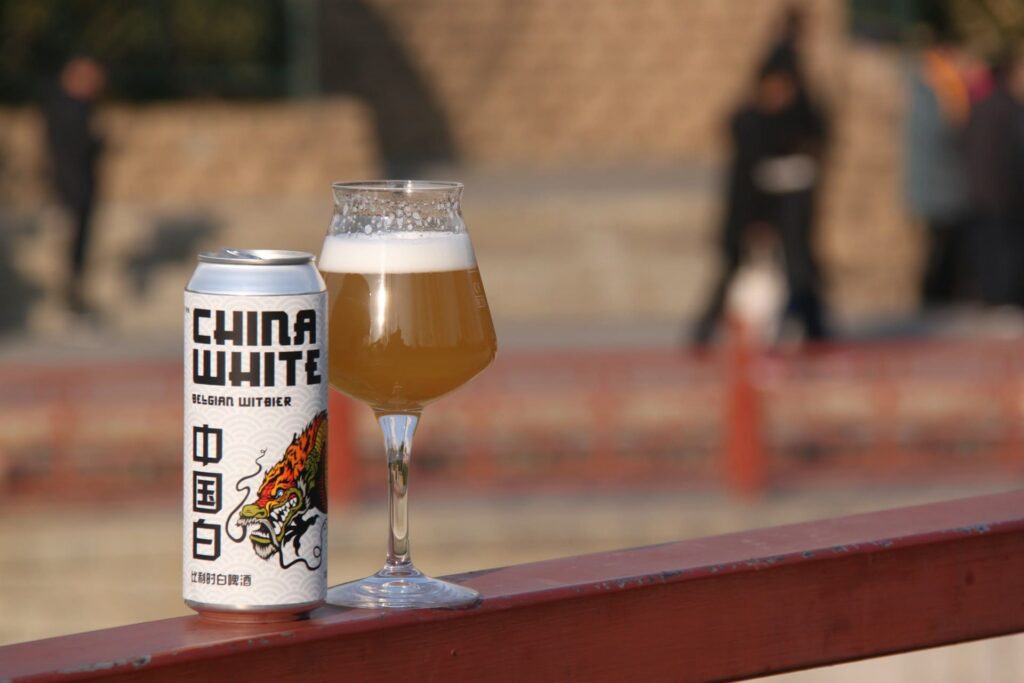
Chinese craft beer reflects far more than changing drinking habits. The following blend of elements creates opportunities that breweries and supply chain businesses rarely find elsewhere:
Ancient Ingredients, Modern Brewing
Chinese craft brewers have built a distinctive identity around local ingredients that rarely appear in Western recipes. Sichuan peppercorns, oolong and jasmine tea, pu-erh tea, large-bark cinnamon, bitter melon, rice, honey, mango, and hawthorn regularly feature in seasonal and flagship releases.
Rather than copying established European or American styles, many breweries use familiar brewing techniques while showcasing regional flavours. Great Leap Brewing’s Honey Ma Blonde and Iron Buddha Blonde remain two of the best-known examples, mixing traditional beer styles with unmistakably Chinese ingredients.
Market That Skipped the “Craft Beer Education” Phase
Craft beer spent decades winning over consumers in markets such as the United States and the United Kingdom. China followed a different path. Younger drinkers already embraced premium coffee, speciality food, and lifestyle brands, making the transition to craft beer far more natural.
Darren Guo, Managing Director of NürnbergMesse China and organiser of the Craft Beer China Conference and Exhibition, explains, “Compared with traditional spirits such as Baijiu, where consumption has long been associated with social obligation and competitive drinking, younger consumers increasingly prioritise self-enjoyment, moderation and personal experience.”
Digital-First Consumer Behaviour
Digital engagement sits at the heart of the craft beer industry in China. Platforms including WeChat, Weibo, Douyin, and Xiaohongshu frame how consumers discover breweries, interact with brands, and share recommendations.
Strong social media storytelling is not an added marketing channel but the primary connection between breweries and their audiences. International businesses entering the market need a localised digital strategy to establish credibility and remain visible.
Beer Tourism as a Genuine Growth Driver
Beer tourism has become another important contributor to industry advancement. According to Market Research Future, beer tourism could generate more than $500 million annually for the craft beer market by 2026.
Major events such as the China Craft Beer Exhibition (CBCE) and the Beijing International Craft Brewing Exhibition continue to attract large numbers of trade professionals alongside enthusiastic consumers.
Regional Diversity No Other Market Can Match
China’s craft beer sector changes dramatically across regions. Chengdu’s brewery culture differs noticeably from Shanghai’s. Meanwhile, Beijing, Wuhan, and Yunnan each offer their own brewing traditions, ingredients, and consumer preferences.
National distribution can become more complex, yet this regional diversity creates valuable opportunities for breweries and suppliers willing to build strong local partnerships.
Where Is the Craft Beer Industry in China Headed?
China’s craft beer market has already moved beyond its early growth stage. Every new microbrewery in China now enters a market that is more competitive, more sophisticated, and full of long-term potential.
Premiumisation Will Keep Accelerating
Premium craft beer remains the largest segment of China’s craft beer market, attracting consumers who value quality, distinctive flavours, and unique brewing experiences.
As per Daxue Consulting, premium beer accounts for around 18% of the market’s total sales. Craft beer, on the other hand, represents approximately 5%, although that figure also includes “craft-style” beers produced by large commercial brewers.
Independent craft breweries therefore occupy a smaller share than the headline number suggests, leaving considerable room for future growth.
Consumer perceptions also blur the line between premium and craft. Many drinkers view higher-end domestic products, such as Tsingtao’s premium ranges, simply as premium beers rather than craft offerings.
As the broader beer market matures and volume growth slows, breweries are increasingly competing through quality, flavour, and brand experience instead of scale alone. Craft beer is placed in a strong position to benefit from the continuing expansion towards higher-value products.
Non-Alcoholic and Low-ABV Is Opening a New Growth Lane
Low-alcohol craft beer has become the market’s fastest-growing category as more consumers seek balanced drinking habits.
Younger Chinese drinkers, particularly Gen Zs, favour beverages with lower alcohol content, reflecting a trend already visible across global beer markets. This trend creates new alternatives for breweries willing to expand beyond traditional styles.
Distribution Remains an Unsolved Challenge
Scaling beyond a local market remains difficult for many independent breweries. High cold-chain logistics costs, fragmented regional distribution networks, and limited supply chain infrastructure continue to restrict nationwide expansion.
At the same time, this gap creates significant commercial opportunities for companies specialising in logistics, refrigerated storage, and distribution technology.
International Import Headwinds vs. Domestic Growth
USDA’s Navigating Opportunities and Challenges in China Imported Craft Beer Market report stated that US beer imports to China declined by 14% during the first five months of 2025 compared with the same period in 2024, largely because of temporary retaliatory tariffs.
Local production partnerships, licensing agreements, and joint ventures have therefore become more attractive options to import-led market entry.
The Next Phase Is Local, Not Expat
The future of the craft beer industry in China will be driven primarily by Chinese-owned breweries, domestic investors, and local consumers.
International businesses are likely to succeed when they integrate into China’s brewing ecosystem through partnerships and long-term collaboration instead of approaching the country simply as another export market.
Capitalising on the Chinese Craft Beer Boom in the World’s Largest Market
China’s craft beer industry has developed into one of the world’s most exciting brewing markets. Local innovation, digitally engaged consumers, and government support for quality improvement continue to boost its growth.
Supply chain companies and international breweries also have a clear opening as distribution remains one of the industry’s biggest challenges. Businesses that establish partnerships, strengthen their presence, and build brand recognition today will be better positioned as the field enters its next stage of upsurge.
The Beer Post connects breweries and supply chain companies with industry decision-makers across the globe while actively growing its audience in China and Southeast Asia.
Partner with The Beer Post to build your online visibility, strengthen industry connections, and establish a competitive advantage before the next wave of growth arrives!